

Applicability of Personal Data Laws: How to Understand What You Need to Comply With?
- 10.03.2026
- Business, Data Privacy
Ann Fischenko
GDPR DPP, junior consultant at DPO Europe
We often talk about how meeting all requirements in the field of personal data protection is no easy task. But understanding exactly which requirements need to be met is no less challenging.
The absence of a single global standard, different regulatory models, and the extraterritorial effect of certain laws create a situation where the same data may simultaneously fall under the jurisdiction of several legal regimes.
In this article, we will examine what difficulties companies face when determining applicable privacy laws and what steps will help ensure important requirements are not overlooked.
Table of Contents
What personal data protection requirements may apply to a business?
When determining which laws apply to a company, one must consider not only the specifics of a particular state’s regulation, but also many other factors: categories of personal data being processed, the product offered, geography of the target audience, and more.
Analyzing these factors is an ongoing process. As the business grows, launches new features, and enters new markets, a company may “imperceptibly” transition into a stricter regulatory regime.
1. Multiplicity of Jurisdictions
The applicability of privacy laws is often related not so much to the fact of a company’s registration in a particular state, but rather to the fact of processing personal data on its territory.
Thus, according to Article 3(2), GDPR applies even if you have no physical presence in the EEA, but offer goods and services to data subjects in the Union or monitor their behavior.
GDPR is far from the only law with extraterritorial effect. PIPL in China, LGPD in Brazil, PDPL in Vietnam — these are just some examples of a sustained legislative trend toward extraterritoriality.
In 2026, virtually any company whose activities are directed at individuals from different jurisdictions automatically falls under several legal regimes simultaneously.
2. Different Regulatory Architectures: Sectoral vs. Comprehensive
Different regulatory models operate in states:
🔹 Comprehensive — when there is a single law covering all categories of data and all sectors. GDPR is such a law in the EU.
🔹 Sectoral — when such a law does not exist, and instead separate regulatory acts are adopted for different industries (as in the US: HIPAA for healthcare, GLBA for finance, FERPA for education, and others).
Due to the sectoral system, it becomes more difficult to determine the obligations affecting a company and to monitor legislative changes in order to update the list of these obligations.
At the same time, the existence of a single law does not mean “one source of requirements“: additional regulatory acts for specific areas are often layered on top of the baseline regime. In the EU, alongside GDPR, the ePrivacy Directive, AI Act, Digital Services Act, Digital Markets Act, and other acts are in effect. As a result, companies must navigate not one document, but a set of overlapping regimes.
3. Multi-Level Norms: Federal and Regional Requirements
In federal states, the applicability of norms is often not limited to the “law of the country“: in addition to the federal level, regional acts are in effect, which may differ in definitions, data subject rights, and company obligations.
For example, in the US, a number of states have their own laws — both comprehensive (for example, CCPA/CPRA in California) and sector-specific (for example, My Health My Data Act in Washington).
As a result, a company is forced to constantly monitor changes at both levels simultaneously.
4. Industry Standards
In addition to laws, part of compliance requirements are formed through industry standards. Sometimes these are merely guidelines and “best practices“, but sometimes they are mandatory rules (for example, through supervisory authority requirements or incorporation of the standard into legislation).
Thus, in Australia, the industry develops enforceable standards—they are mandatory, and the regulator monitors their compliance. And in the US, Japan, and Singapore, codes of practice are more commonly used — they are issued by industry organizations (for example, OPA, TrustArc, WebTrust), and as a rule, they do not have legally binding force by themselves.
Ultimately, companies may fail to account for even half of the requirements imposed on them by applicable acts.
Instructions: how to understand which laws apply to a company?
And nowwe’ll explain what steps a company can go through to identify applicable laws and obligations in the area of personal data.
Step 1: Personal Data Mapping
It is impossible to determine applicable legislation without understanding what data the company collects, processes, and stores.
At this stage, it is necessary to:
🔹 Compile a list of categories of personal data being processed;
🔹 Describe data sources;
🔹 Record the geography of data subjects;
🔹 Establish data storage and processing locations.
This step creates the foundation for further analysis, which is implemented through the creation of a personal data processing register.
Article: The EU Digital Rules Simplification: What Does It Mean for Business?
Step 2: Analysis of Territorial Applicability of Laws
Then it is necessary to determine which countries’ legislation may apply to your organization depending on which markets you target in your activities and whose data subjects’ data you process.
Applicability criteria vary from act to act, but are usually related to territory or citizenship. The following can be identified:
🔹 Physical presence or legal entity on the territory of the state;
🔹 Provision of services to data subjects on the territory of the state;
🔹 Monitoring the behavior of data subjects on the territory of the state;
🔹 Processing data of citizens/residents regardless of location.
Step 3. Analysis of Regulation in Applicable Jurisdictions
Next, it is important to determine how personal data legislation is structured in those states whose regulation may be applicable to your organization.
The following questions should be resolved:
🔹 Is comprehensive or sectoral regulation in effect? Which acts are key?
🔹 At what levels do privacy laws exist (supranational, federal, regional)?
🔹 Are there legally binding industry laws and standards in effect?
Step 4. Analysis of Industry Affiliation and Specifics of Data Being Processed
To answer all these questions, one must consider not only the peculiarities of regulation, but also the specifics of the company itself: what categories of data and in what volume it processes. After all, this is typically what industry requirements are tied to.
Thus, there is a high probability that industry acts and standards exist that will impose additional obligations when:
🔹 The company processes special categories of data (for example, health data);
🔹 The company processes data of vulnerable categories of subjects (for example, children or employees);
🔹 The company belongs to a specific activity sector from the regulators’ perspective (for example, finance, telecommunications, media, and other digital services).
Step 5: Checking Breach Notification Requirements
Despite the fact that in the EU, under the Digital Omnibus framework, the unification of regulator notification requirements through a single window is being discussed to reduce bureaucratic costs and provide business convenience, notifications are currently submitted to different regulators. The same often occurs in other jurisdictions as well.
To reduce regulatory risks, it is necessary to:
🔹 Compile a list of all jurisdictions at all levels from supranational to local where such requirements are in effect.
🔹 Record the timelines, format, and recipients of notifications.
🔹 Integrate these requirements into the Incident Response Plan.
Want to learn how to conduct data mapping?
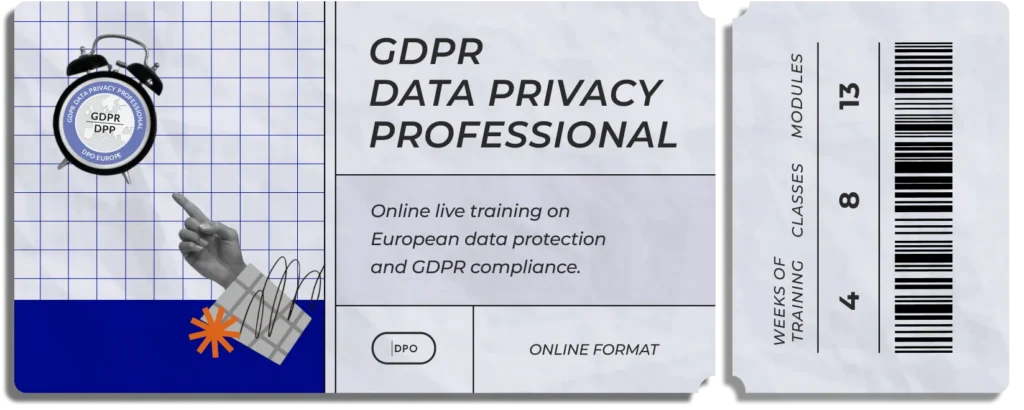
Take the GDPR Data Privacy Professional course. In it, participants work in teams to study a training case, build a data map, and create a processing register step by step based on it.
The complexity lies in the fact that notification submission requirements often differ not only in form and timelines, but also in substance: somewhere regulators require notification of any breaches, somewhere only upon reaching a certain risk level.
Step 6: Choosing the Strictest Standard (the “highest level achievable” principle)
If your organization operates in jurisdictions with different levels of protection, best practice is to apply the strictest requirements to all operations. This will allow you to:
🔹 Reduce the risk of violations in jurisdictions with high requirements.
🔹 Simplify privacy program management—a single policy instead of multiple local variants.
🔹 Increase user trust.
For example, if a company processes data both in the EU and in a country without personal data legislation, it is advisable to apply GDPR requirements to all data.
Step 7: Monitoring Legislative Changes
Privacy legislation is developing dynamically, so it is necessary to:
🔹 Track draft laws and new regulatory acts in jurisdictions of presence.
🔹 Monitor regulator activity (fines, directives, guidance).
🔹 Consider cultural and linguistic peculiarities when working with translations of laws.
Don’t know which laws apply to your company?
The DPO Europe team operates in 49 jurisdictions and knows how to build compliance without unnecessary costs. Sign up for a free consultation with an expert. During it, we will analyze your situation and propose a solution.
Conclusion
Regulation in the field of personal data protection is only becoming more complex, and the “right answer” when determining applicable requirements is not a list of ten laws, but a working process that helps identify and comply with them in a timely manner.
If a company understands its data, regularly reviews the list of obligations, and focuses on the highest standard, it wins both in reducing risks and in customer trust.
Personal Data Protection Help and Support under GDPR and National Laws
We help establish systematic personal data protection practices through training and consulting services.
Consulting services on data privacy according to GDPR, ISO 27701 and other international standards.
EU Representative Services under GDPR is a pay-as-you-go service where representation is free during periods without data subject requests or communication with supervisory authorities. The service remains free if the company has not significantly altered its data processing practices since its onboarding process.
A fundamental course that covers all aspects of GDPR and teaches how to apply them in practice.
Privacy training programs for teams both in live online and e-learning formats with diverse level of depth. Customizable and interactive solution for fair price.







Reach Data Privacy & AI Compliance

Fill in the form and get a free consultation.
- Implementation of 7+ legal frameworks.
- Individual and corporate training on the GDPR, and international standards.
- Development of personal data protection systems within organizations.
- Custom services upon request.